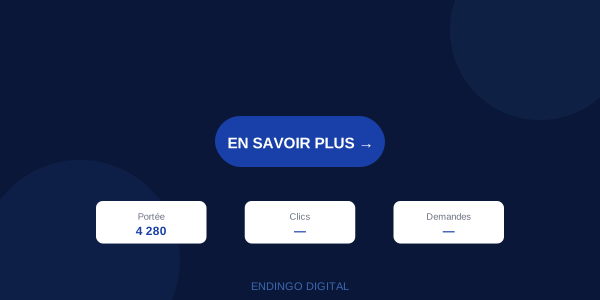
"My post got 3,000 views" is a line heard often, presented as proof of success. But reach, clicks, and leads received measure three different things, and confusing them leads to misjudging what's actually working.
Reach: who saw the post
It's the most visible, easiest-to-get number — and also the one that says the least about real interest. A post can be seen by thousands of people without a single one feeling the need to act.
Clicks: who did something
A link click, an expanded "see more," a visited profile — that's a first signal of real interest, rarer and more meaningful than a simple view. A low click rate on a highly-viewed post often points to a missing or unclear call to action (see our article on that), not a lack of audience.
Leads: who actually tried to reach you
A WhatsApp message, a filled-out form, a received call — that's the only measure directly tied to a business opportunity. It's also the rarest of the three, and that's normal: most interested people never take that step right away.
What this means in practice
- A high-reach post with no leads isn't a failure — it builds awareness, a different role from direct conversion.
- A modest-reach post that generates a real lead can be worth more, commercially, than a highly-viewed one that leads nowhere.
- Judging a strategy on reach alone pushes you toward content that's liked, not necessarily content that sells.
For a lead received to actually be useful, it still needs proper follow-up — that's exactly what structured request tracking handles, covered next in this series.