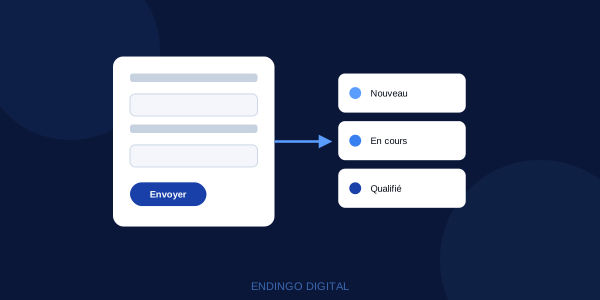
A single free-text "message" field lets someone describe their request their own way — but then leaves you guessing about budget, urgency and real need. A well-designed form asks the right questions from the start, without asking for too much.
Number of fields: finding the balance
Every extra field slightly lowers the odds a visitor finishes the form. The goal isn't to minimize fields at all costs, but to keep only the ones whose answer actually changes what you'll do with the request.
Fields that really qualify
- The service needed: routes the request straight to the right person or pricing.
- A budget range (even a wide one): avoids preparing a detailed proposal for a budget that was never going to fit.
- Desired timeline: a real deadline changes how a request should be prioritized.
- Preferred contact method (email, phone, WhatsApp): avoids conversations that end up in the wrong channel.
What doesn't need asking right away
Very specific project details (exact colors, a full spec sheet) can wait for the first human conversation — asking for them in the form just makes the first contact unnecessarily long.
Order matters as much as content
Starting with easy questions (name, service needed) before ones that need thought (budget) helps avoid losing the person early on. The contact field comes last, once they're already committed to answering the previous questions.
A well-designed form is useless if it's not connected to any follow-up afterward — that's exactly what Endingo Conversion OS covers, the topic of the next article in this series.